by admin | Mar 31, 2021 | community, Mental Health, News, Nutrition
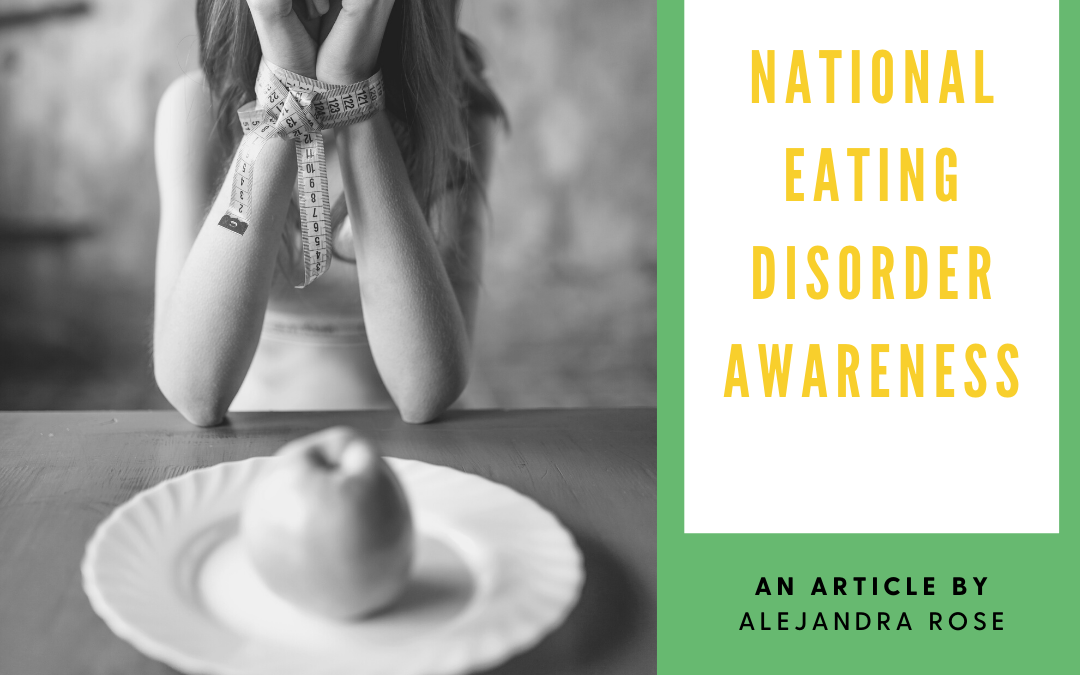
The National Eating Disorder Association will be having the annual NEDA Walk on April 10th, 2021. This year will be a virtual walk event to help provide a safe way to interact during the pandemic, but you can still get involved by hosting or joining a virtual team or making a financial contribution.
Per NEDA, 30 million Americans suffer from an Eating Disorder and the NEDA Walk is a great way to increase awareness and access to recovery. It is likely that you know someone in your live who is suffering from an Eating Disorder, and the NEDA walk can be a great way to show your support for your loved one and their recovery journey. If you are a person who is suffering from an Eating Disorder, know that there is help out there and that you deserve care and support in your recovery journey.
TheraCare Wellness is participating in the NEDA Walk this year and would love to have you join our team. We are a team of Psychologists, Psychiatrists, Therapists, Registered Dietitians, and Acupuncturists that want to help raise awareness to the Eating Disorder Recovery process. You can join our team or make a financial contribution by going here: http://neda.nationaleatingdisorders.org/goto/theracarewellness
We had the opportunity to chat with Joan DeFilippo, Director of Fundraising and Community Engagement at The National Eating Disorder Association, this week about the NEDA Walk. The year for the NEDA walk, individuals can create their own team, fundraise as individuals or as team members, or donate a financial contribution. There are also many volunteer opportunities if a financial contribution is not accessible for some.
Because this year the walk will not be in person, NEDA will be offering a live zoom session on April 10th at 11 AM PST and will include guest speakers, an MC, a musical performance, and a photo booth. Many people are choosing to meet as a family in the safety of their homes, or safely social distance to be able to engage with loved ones. After the zoom meeting, participants will have the option to walk a mile. For some participants, exercise might be restricted due to their individualized movement plan and needs, so folks are being encouraged to explore with their treatment team or providers if they are cleared for this level of movement.
If you would like to get involved with volunteer opportunities, you can reach NEDA via email at walks@nationaleatingdisorders.org Volunteers are needed and can help out by calling participants and reaching out to past participants, posting on social media, or even creating their own recovery journey videos to raise awareness. When someone has a story to tell, their story may impact others and raise awareness to the help that NEDA can provide.
by admin | Mar 25, 2021 | community, News
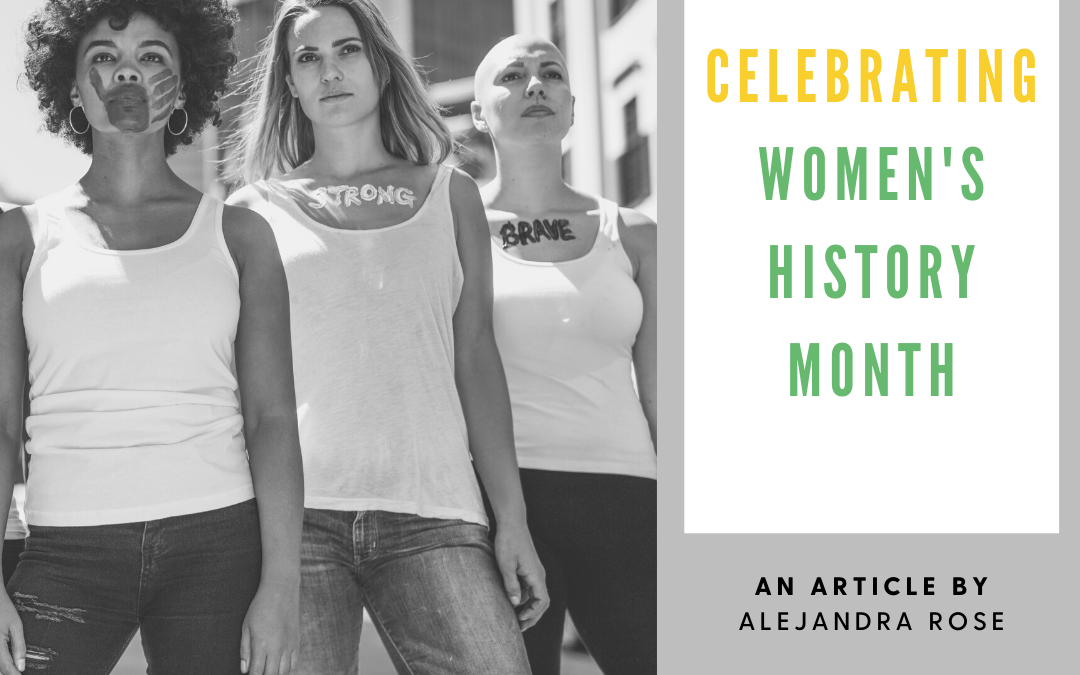
Women’s History Month is during March every year, and International Women’s Day is March 8 th . There are many ways to celebrate and honor Women’s History Month. Here are some ideas to help you get started:
1. Read books supporting women during Women’s History Month. Learn more by going here: https://www.cnn.com/2021/03/01/cnn-underscored/womens-history-month-books
2. Watch documentaries that provide education on Women’s History. Learn more by going here: https://www.pbs.org/articles/2021/03/what-to-watch-womens-history-month-2021/ Watch an episode of the Smithsonian Institution’s episode of Social Studies Online on Women’s History Month. Learn more by going here: https://www.youtube.com/watch?v=UUyH3LPBv2Q
3. Watch movies that display empowering stories of women. Learn more by going here: https://redtri.com/10-inspiring-movies-for-womens-history-month-to-watch-with-your-kids/
4. You can give back to the community during Women’s History month by making a financial contribution, or a contribution of time through volunteer work. Give back by making a charitable donation to an organization that supports women and girls. Learn more by going here: https://www.charitynavigator.org/index.cfm?bay=content.view&cpid=2133 You can also learn more by going here: https://www.bustle.com/p/where-to-donate-during-womens-history-month-2020-22588039 Get engaged in virtual volunteer work focused on Women’s History Month. Learn more by going here: https://goodera.com/blog/virtual-volunteering/15-virtualvolunteering-opportunities-to-celebrate-international-womens-day/
5. Get connected to the art world by visiting a virtual museum, such as the Nation Women’s History Museum. Learn more by going here: https://www.womenshistory.org/womens-history/online-exhibits or the National Museum of Women in the Arts. Learn more by going here: https://nmwa.org/support/advocacy/
6. Learn about Women’s History and the Right to vote for this year’s theme of Women’s History Month, “Valiant Women of the Vote: Refusing to Be Silenced” Learn more by going here: https://nationalwomenshistoryalliance.org/
7. Honor trans women by learning about historical events of trans women during women’s history month. Learn more by going here: https://transgenderlawcenter.org/archives/10002 Learn about the need for inclusivity and representation of trans women during women’s history month. Learn more by going here: : https://temple-news.com/trans-women-seek-more-inclusivity-during-womens-history-month/ Learn about how Black trans women aid in the fight
for women’s rights. Learn more by going here: https://www.harpersbazaar.com/culture/features/a35746428/black-trans-women-fight-for-womens-rights/
8. Listen to a playlist in honor of Women’s History Month. The Grammy Awards put together a playlist of women nominees for 2021. Learn more by going here:
https://www.grammy.com/grammys/news/listen-womens-history-month-playlist-nominees-2021-grammy-awards-show You can also listen to a stream of music by women composers. Learn more by going here: https://www.yourclassical.org/listen/women-history Peloton added a playlist for Women’s History Month on Spotify. Learn more by going here: https://open.spotify.com/playlist/3GvFgvZOxlwJ64oXaFhyTf
9. Listen to podcasts about Stories for Women’s History Month. Learn more by going here: https://blog.listenwise.com/2019/01/stories-womens-history-month/ Listen to podcasts about remarkable ladies for Women’s History Month. Learn more by going here: https://www.radio.com/news/gallery/podcasts-about-remarkable-ladies
10. Journal about a public figure or icon that represent women’s empowerment for you. Identify what inspires you about this woman, what about her you want to emulate, and how she has made a difference in your life directly. Write a letter to a woman in your life that inspires you. This might include a family member or member of your extended family, a friend or colleague, a teacher or a mentor or a supervisor that you look up to, or even someone you know casually. We hope this list helps you identify opportunities to get connected during Women’s History Month!
by Jennifer Nguyen | Mar 25, 2021 | community, Emotional Health, News
It is not news to report that we, as a society, have been experiencing an immense amount of fear, confusion, and frustration this year. We have and are still navigating the unpredictable measures related to COVID-19 and reinventing our daily norms at a moment’s notice. Even though our nation has been under attack by this contagion for over a year now, it has shed light on another contagion that plagued us well before COVID-19: our nation’s history with racism and hate crimes, specifically related to the Asian American and Pacific Islander (AAPI) community. In this 3 part series, I will begin by sharing a few statistics from this year’s uptick in AAPI hate crimes and practical ways one can engage in support our AAPI community. Then, I will share my experience with racism and my journey of finding my racial identity. Finally, I will end the series by sharing TheraCare’s value in providing an all- inclusive therapeutic experience for all who are seeking support.
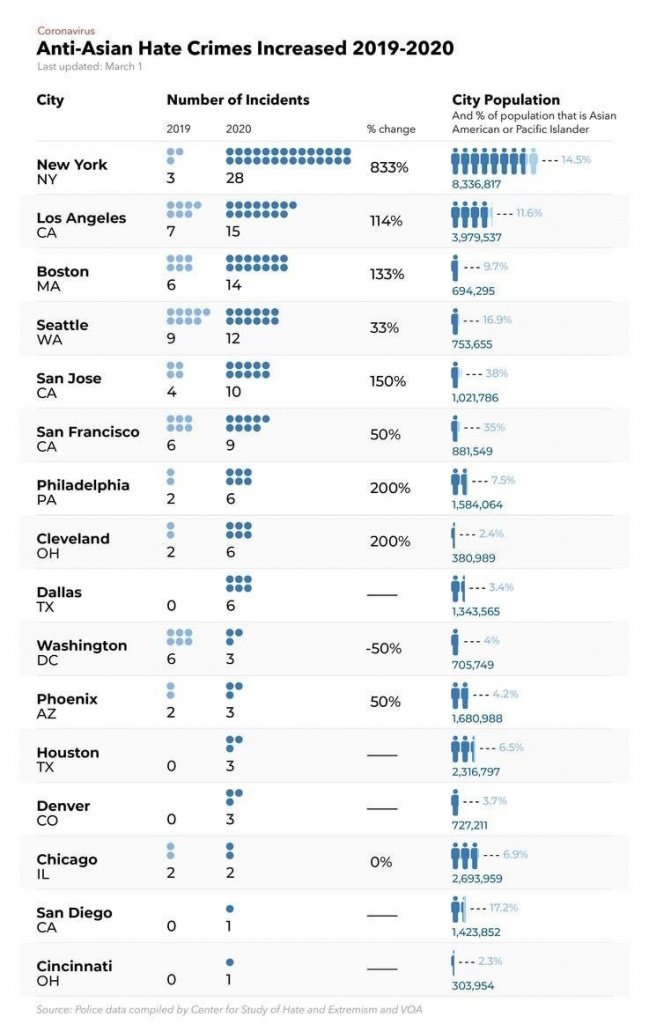
On January 28, 2021, Vicha Ratanapakdee was taking his morning stroll in San Francisco, CA. He was pushed to the ground in broad daylight resulting in injuries. He died a few days later. This is just one incident that received media attention amongst many hate crimes towards Asian Americans this year. According to the STOP AAPI HATE (an organization documenting anti-Asian hate in the midst of COVID-19) National Report, there have been 3,795 incidents received from March 19, 2020 to February 28, 2021. Out of the 3,9975 cases, 503 cases reported just in the beginning of 2021. The majority of these cases reported as verbal harassments and shunning as main forms of discrimination (68.1% and 20.5 %, respectively). Moreover, women are 2.3 times more than men to report cases. I also wonder if an aspect of under-reporting is impacted by cultural standards/ influences of “saving face” and gender role expectations.. There has also been a signifiant difference between various Asian communities experiencing these hate crimes. The Chinese community is the largest community to experience hate (42.2%), followed by Koreans (14.8%), Vietnamese (8.5%), and Filipino (7.9%). In many major cities, AAPI hate crimes have increased to at least 50 % (see graph below).

These statistics and stories may lead you to feel lots of different emotions: despair, heartache, anger, and/or activated in some type of way. Fear not (!), there are some practical ways to hopefully provide some helpful tips around supporting your AAPI community:
- Stay Curious
- I believe a strong way to support the AAPI community is simply to stay curious about their experiences in their community. If they are feeling the weight of their experiences of discrimination and racism, ask if there is something you can do directly to support them. Try not to assume that everyone in the AAPI community needs or wants help at the moment. The best, most powerful act that we can do for one another is to listen.
2. Support an AAPI organization/ local businesses
- Here are some AAPI organizations that you could monetarily support and/or volunteer at:
- https://stopaapihate.org– Organization that is tracking anti- Asian hate during COVID-19
- https://aaci.org– Non-profit mental health agency located in the heart of San Jose
- https://dearasiansinitiative.carrd.co – Organization that works to bridge the gap between #BLM movement and anti- Blackness in the Asian community through translated letters to create unity amongst minorities.
- https://www.advancingjustice-aajc.org
3. Be an ally and educate yourself.
I will leave you with this. Amanda Nguyen, a social entrepreneur and civil rights activist, eloquently said: “It’s important to not just compare issues across communities, but rather work together in solidarity, Justice is a fabric that has threads from all different communities.”
Sources:
https://www.pbs.org/newshour/nation/watch-live-how-to-address-the-surge-of-anti-asian-hate-crimes
https://www.pewresearch.org/social-trends/2020/07/01/many-black-and-asian-americans-say-they-have -experienced-discrimination-amid-the-covid-19-outbreak/.
https://www.voanews.com/usa/race-america/hate-crimes-targeting-asian-americans-spiked-150-major-us-cities
https://stopaapihate.org/reportsreleases/
– Jennifer Nguyen, AMFT
by admin | Mar 25, 2021 | Mental Health, Social Work
March is National Social Work Month, and this year, the National Association of Social Workers has chosen the theme of Social Workers are Essential. What do you think of when you hear the term “social worker?” It is a phrase we all have heard and yet there are some misconceptions about what a Social Worker is and does.
A Social Worker is a Master’s level clinician who specializes in helping people. Many social workers work for the county, providing services to youth and families who need support and mental health care. Some work in hospitals, correctional facilities and schools. Many social workers provide therapy services and work in private practice or treatment settings. Some provide leadership in organizations through Programs, Clinical, Operations or as Directors.
Social workers can work during their graduate degree program as Trainees, pre-licensed as Associates, or become a Licensed Clinical Social Worker. Some may even go on to provide supervision to Trainees and Associates.
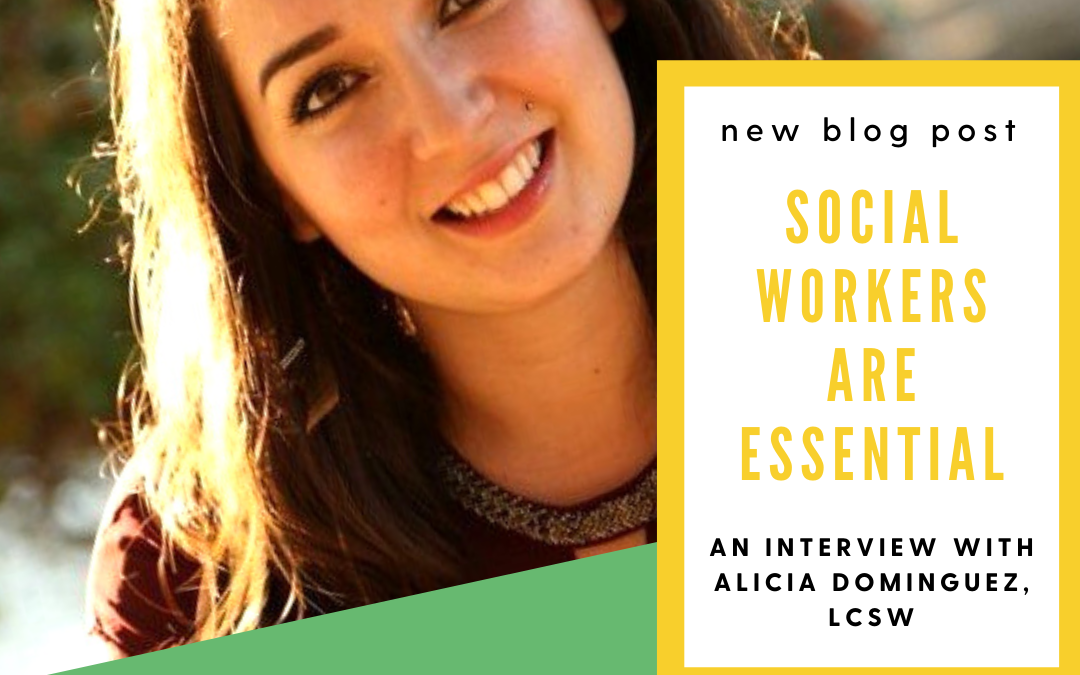
For National Social Work Month, we took the opportunity to interview our own staff member, Alicia Dominguez, Licensed Clinical Social Worker. Alicia specializes in working with individuals in repairing their relationships with others or themselves.
Alejandra: What led you to the field of social work? Tell us about your journey of becoming a Licensed Clinical Social Worker.
Alicia: I was always interested in psychology and studying people’s behaviors and emotions. I thought I wanted to become a psychologist. During my undergrad program, I heard two speakers who graduated from USC’s School of Social Work and they were doing work that I wanted to do! That’s when I decided to pursue social work and I ended up going to USC like those speakers.
Alejandra: What type of work does a Licensed Clinical Social Worker do? What makes the field of social work so essential in your experience?
Alicia: The great thing about social work is that it is so versatile. A Licensed Clinical Social Worker does not just “take away kids” (I used to believe that!). LCSWs can provide services in community clinics, private practice, group practice, schools, County agencies, etc. Our services range from case management to mental health therapy. We can also do macro-level work, such as program development, and public policy and advocacy. In my journey to become a social worker, I was trained to see an issue on an individual level as well as on a community and societal level.
Alejandra: What types of populations benefit from working with a Licensed Clinical Social Worker? What populations do you personally like to work with the most?
Alicia: Any person or agency would benefit greatly from working with a Licensed Clinical Social Worker and having a LCSW on their team. I have worked with so many populations, all age groups, in a variety of settings. I tend to have a “systems” mindset, so I am really drawn to problems that are impacting an individual’s personal relationships and other areas of their life, such as work, school, social, physical health, etc.
Alejandra: What do you wish the world knew more about the field of social work? What myths about social workers have you encountered that you wish people would become more informed on?
Alicia: I definitely want people to know that social workers don’t just take kids away from their parents. In fact, many social workers support family reunification. We provide emotional support, resources, and advocate for our clients. Social workers also follow a strict Code of Ethics to ensure they are providing the best care possible for their clients.
Alejandra: What guidance would you give to a person who is starting on their journey to become a Licensed Clinical Social Worker? Is this feedback that was given to you when you were starting on your journey, or is this something that you wish you knew when you were starting your journey?
Alicia: I would encourage a new social worker to be open to any opportunities. I was encouraged to do the same, but I didn’t really understand it until I was working in the field. I ended up working in settings and with populations that I never thought I would, and ended up enjoying it! We may start our journey with one passion, but find new ones along the way.
TheraCare Wellness would like to extend a big thank you to Alicia and all Social Workers this National Social Work Month, and all year long. Social Workers are a necessary part of the mental health field and have impacted the lives of many individuals and families in a positive way. If you are interested in making a difference in the lives of others, the field of social work may be for you.
To learn more about Alicia and her services with Theracare Wellness, check out her bio: https://theracarewellness.ivirtualweb.com/team/alicia-dominguez-lcsw/
– Alejandra Rose, LMFT
by admin | Mar 25, 2021 | community, Nutrition
The National Eating Disorder Association hosts NEDA week every year to raise awareness about eating disorders, and this year NEDA week is from February 22 – 28. You might be interested in learning more, but might not know where to start. We put together this collection of resources to support individuals who are in their recovery journey, loved ones supporting someone in recovery, or professionals who want to provide excellent care to their clients. Year round, NEDA offers amazing services such as a hotline that can be reached at 800-931-2237 (or text “NEDA” to 741741). They also offer an online chat option on their website. Learn more about NEDA by going here: https://www.nationaleatingdisorders.org/get-involved/nedawareness You can also join the annual NEDA walk, which on the west coast will be on April 10, 2021, and helps raise awareness for Eating Disorders. You can sign up here: https://www.nedawalk.org/
Eating Disorders are something which impacts the lives of many Americans, as well as people all over the world. The ANAD (National Association of Anorexia Nervosa and Associated Disorders) lists general statistics about Eating Disorders as well as for marginalized groups such as BIPOC, LGBTQ+, People With Disabilities, People in Larger Bodies, Athletes and Veterans. You can learn more about statistics surrounding Eating Disorders by going here: https://anad.org/get-informed/about-eating-disorders/eating-disorders-statistics/
ANAD also offers a network of free Eating Disorder Support Groups to the community, and many are being offered online during the pandemic. This is a great resource for individuals and families who are needing community-based support or are new to the recovery journey. You can find more about their support groups by going here: https://anad.org/get-help/about-our-support-groups/
If you are looking for reading materials to become educated on Eating Disorders and the recovery process, you can find some resources here. Sick Enough by Jennifer Guadiani is a book that helps to provide the medical perspective on the impact of Eating Disorders. You can find it here: https://www.amazon.com/Sick-Enough-Jennifer-L-Gaudiani/dp/0815382456
A great book that is very healing for women who are on the journey of recovery is Eating in the Light of the Moon by Anita Johnson, which provides metaphors and story telling to aid in the healing journey. You can find it here: https://www.amazon.com/Eating-Light-Moon-Relationship-Storytelling/dp/0936077360
If you are interested in reading about the person journey of someone who has also gone through the recovery process, Life Without Ed by Jenni Schaefer provides a perspective on Eating Disorders as a relationship. You can find it here: https://www.amazon.com/Life-Without-Ed-Declared-Independence/dp/0071422986 Jenni Schaefer also has a second book about her healing journey called Goodbye Ed, Hello Me. You can find it here: https://www.amazon.com/Goodbye-Ed-Hello-Me-Disorder/dp/0071608877
If you are looking for interactive reading materials on improving relationship with food, adopting an All Foods Fit mentality, and challenging diet culture, The Intuitive Eating Workbook by Evelyn Tribole might be a good fit for what you are looking for. You can find it here: https://www.amazon.com/Intuitive-Eating-Revolutionary-Program-Works/dp/1250004047
If you are looking to challenge diet culture expectations on body size and cultivate acceptance for body diversity, Health At Every Size by Linda Bacon is a great resource to look into. You can find it here: https://www.amazon.com/Health-At-Every-Size-Surprising/dp/1935618253 In line with the HAES philosophy is the concept of Joyful Movement. It can be healing to reframe your relationship with body and relationship with movement by finding movement that feels joyful in the body, versus exercising as compensation or punishment.
If you’re looking for a podcast to listen to, Christie Harrison has a podcast focused on supporting the recovery process and challenging diet culture. You can find her podcast here: https://christyharrison.com/foodpsych and you can also find her book, Anti-Diet, here: https://www.amazon.com/Anti-Diet-Reclaim-Well-Being-Happiness-Intuitive/dp/0316420352
If you are a professional who wants to look into supporting those in recovery from an Eating Disorder, you can connect with organizations like International Association of Eating Disorders Professionals and look into becoming a Certified Eating Disorder Specialist. You can find more about IADEP by going here: http://www.iaedp.com/about-us/ There are also some amazing treatment centers that offer free online trainings for professions to get CEU courses on treating Eating Disorders. One such center is Alsana, you can find more information by going here: https://www.alsana.com/events-calendar/
Most importantly, if you or someone you care about is struggling with disordered eating, or a negative relationship with food or their body, know that help is available. It can be healing to connect with a therapist and a dietitian who understands Eating Disorders and can help you on your journey of recovery.
– Alejandra Rose, LMFT